In short: Theoretical resolution is set by the pixel: 20 µm pixels can record at most 25 line pairs per millimetre. Measured resolution is what a sensor actually shows, and it is always lower. The iSuni sensor resolves 20 lp/mm measured. When you compare spec sheets, ask which figure you are reading.
What “line pairs per millimetre” means
A line pair is one dark line and one light line side by side. A pattern of 20 lp/mm packs twenty of those pairs into one millimetre, so each line is 25 µm wide. The finer the pattern a sensor still shows as separate lines, the more fine detail it records: thin root canals, the edge of a restoration, early changes in bone.
The pixel sets the ceiling
A sensor records one value per pixel, so it needs at least two pixels to tell a dark line from a light one. With 20 µm pixels there are 50 pixels in a millimetre, and at most 25 line pairs: that is the theoretical 25 lp/mm. Choose a pattern to see what twenty 20 µm pixels record of it.
10 lp/mm. Each line covers more than two pixels: recorded clearly.
20 lp/mm, measured. Still separate lines on a perfect grid. In a real sensor, light spreading in the scintillator softens them: 20 lp/mm is the finest pattern the iSuni sensor resolves.
25 lp/mm, the pixel limit. One pixel per line, and only when the pattern lines up exactly with the pixels: the theoretical maximum of a 20 µm pixel.
35 lp/mm, beyond it. Finer than the pixels can follow: they record a false, coarser pattern instead. No 20 µm sensor can show this.
- The pattern
- What the pixels record (20 × 20 µm)
- Illustration on a perfect 20 µm grid, not a measurement.
Why measured resolution is lower
Between the X-ray and the pixel, the scintillator turns X-rays into light, and that light spreads a little before it reaches the detector. Electronics and noise soften the finest lines further. Measured resolution, usually read from an X-ray of a line-pair test pattern, includes all of that; the theoretical figure includes none of it.
CsI on the detector
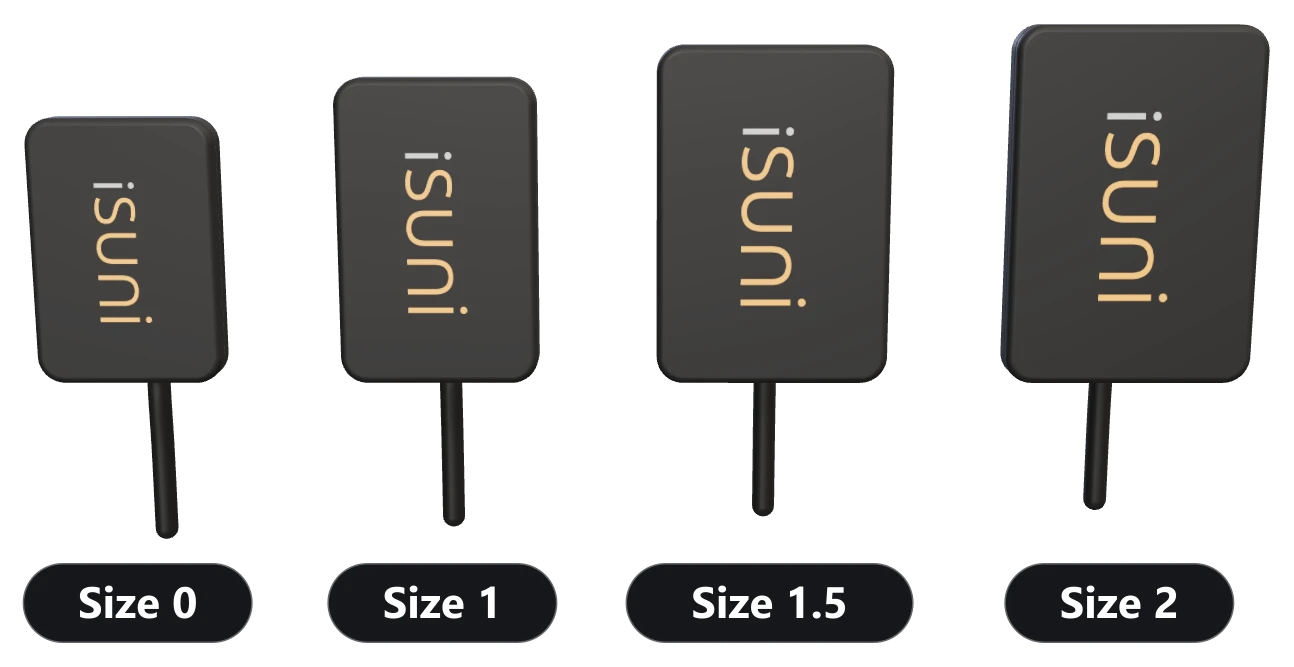
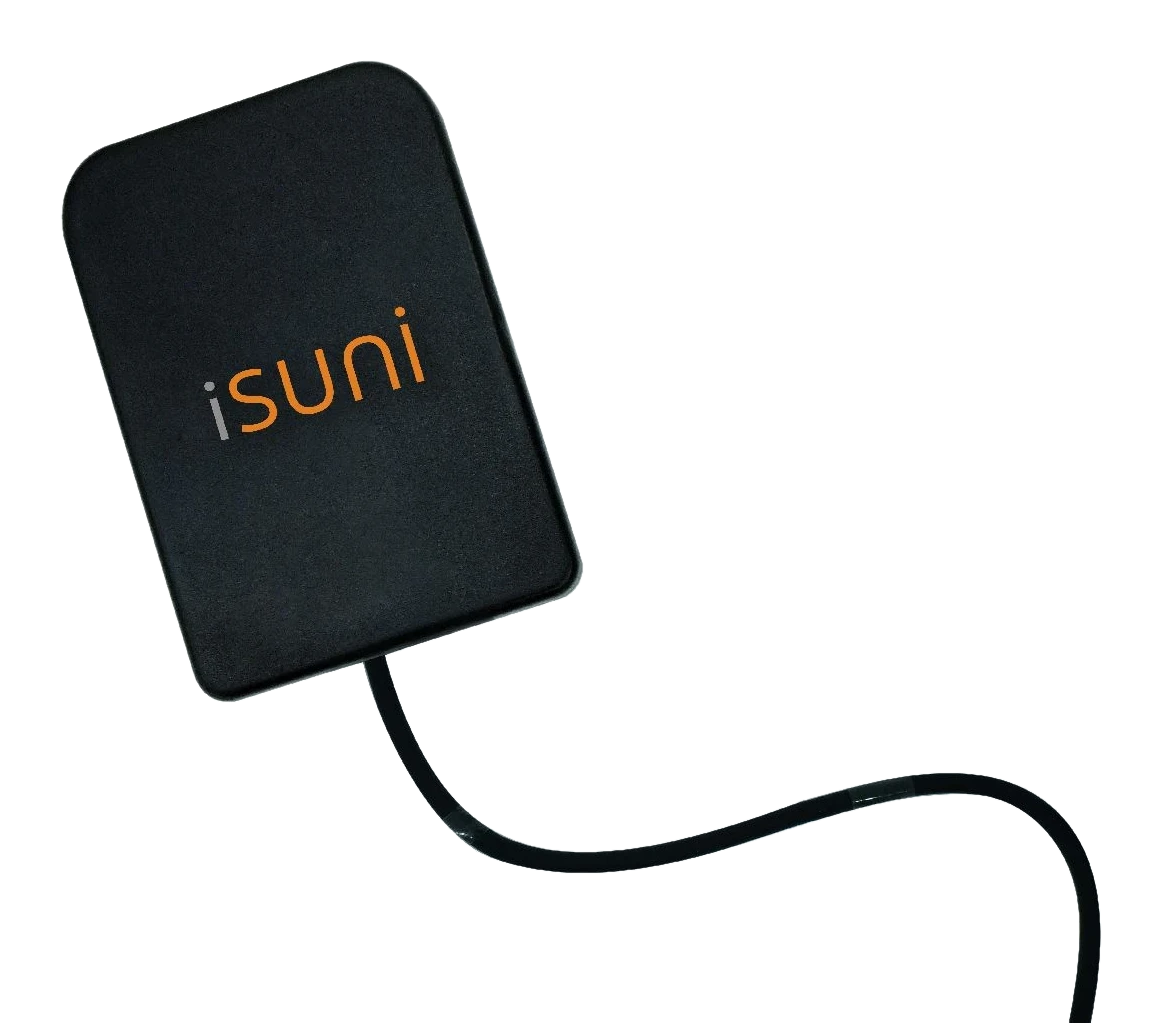
iSuni sensors in sizes 0, 1, 1.5 and 2 use a caesium iodide (CsI) scintillator deposited directly on the CMOS detector. CsI grows in fine columns that guide the light straight down, which keeps edges sharp.
One pixel, four sizes
Every iSuni size uses the same 20 µm pixel, so the larger sizes have more pixels, not bigger ones:
| Size | Active area | Image |
|---|---|---|
| Size 0 | 18 × 24 mm | 900 × 1200 pixels |
| Size 1 | 20 × 30 mm | 1000 × 1500 pixels |
| Size 1.5 | 24 × 33 mm | 1200 × 1650 pixels |
| Size 2 | 26 × 36 mm | 1300 × 1800 pixels |
Reading a spec sheet
- Ask whether the lp/mm figure is measured or theoretical. A theoretical figure is just the pixel size written another way.
- Compare the pixel size directly: 20 µm on iSuni sensors.
- Grey levels are a separate figure: 16 bits (65,536 levels) is about contrast, not about how fine a line can be.
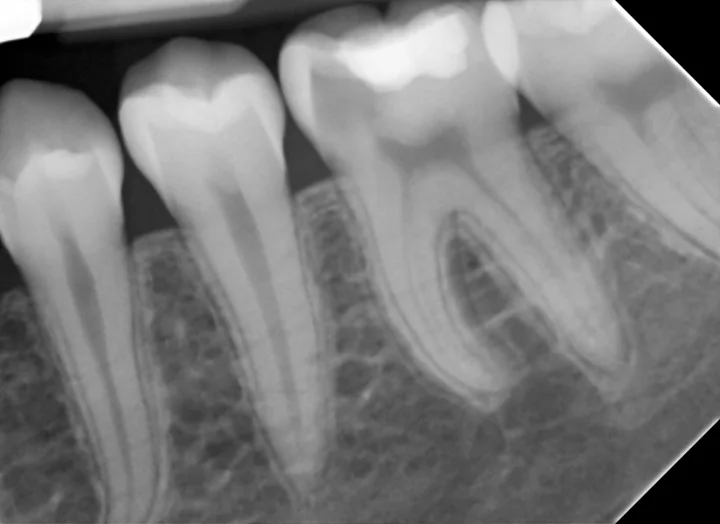
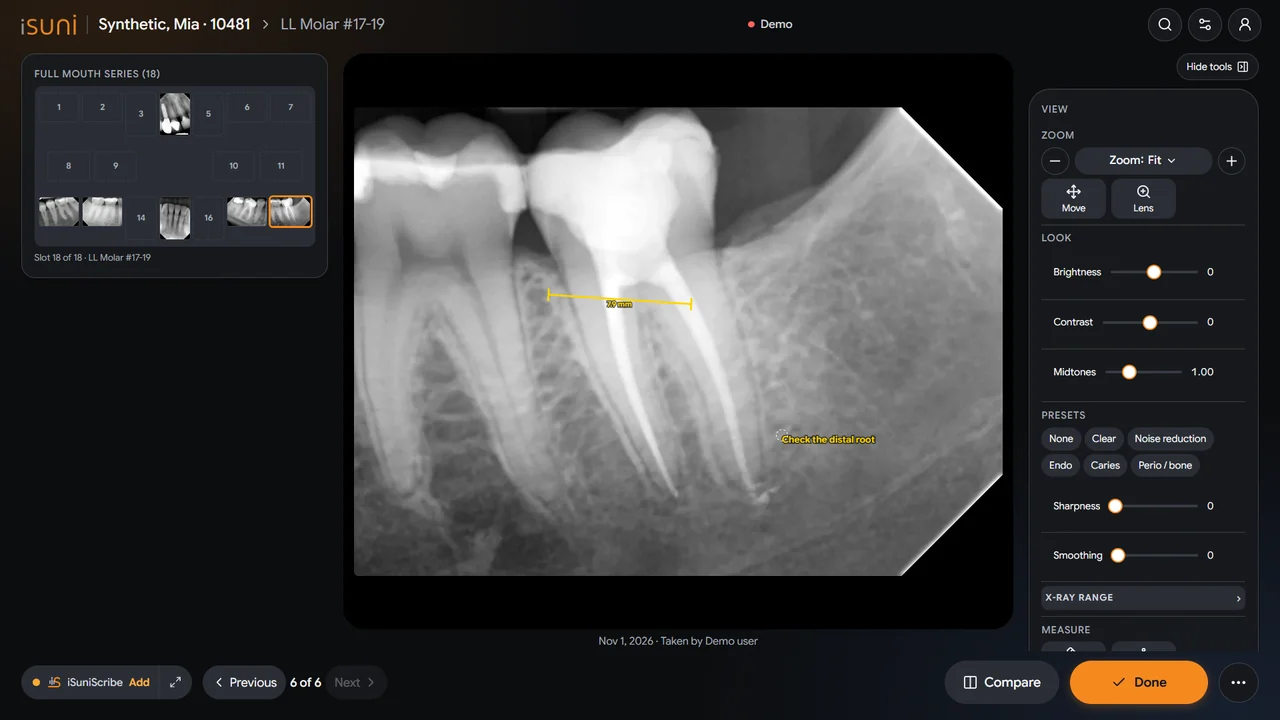
- Look at real X-rays. You can compare the SuniVision™ presets on iSuni X-rays in SuniVision™ Studio.